Merry Shirvani/ UX Designer
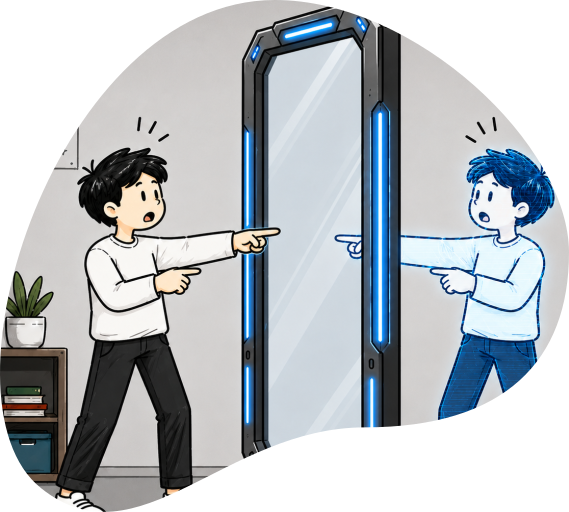
A person facing their reflected AI self in a digital mirror

Self
Clones

Exploring “Talking to Yourself” as a Novel Interaction for Responsible Mental Health Support

  • Product Design
  • Responsible AI
  • UX Research
Role
Lead UX Designer & Researcher
Time
2023–2025
Project Type
Academic

/ Context

Finally, Someone Who Thinks Like You. Literally.

Ever wished you could talk to someone who sees things exactly the way you do? Someone who knows you inside and out, so you never have to explain yourself. Someone who truly gets it... someone like... well, you?

As AI gets increasingly good at sounding human, the idea of a creating a digital version of ourselves no longer feels quite so far-fetched. Talking to our clone might not be so different from the conversations we already have inside our own heads. Could it be the emotional support we've been missing all along?

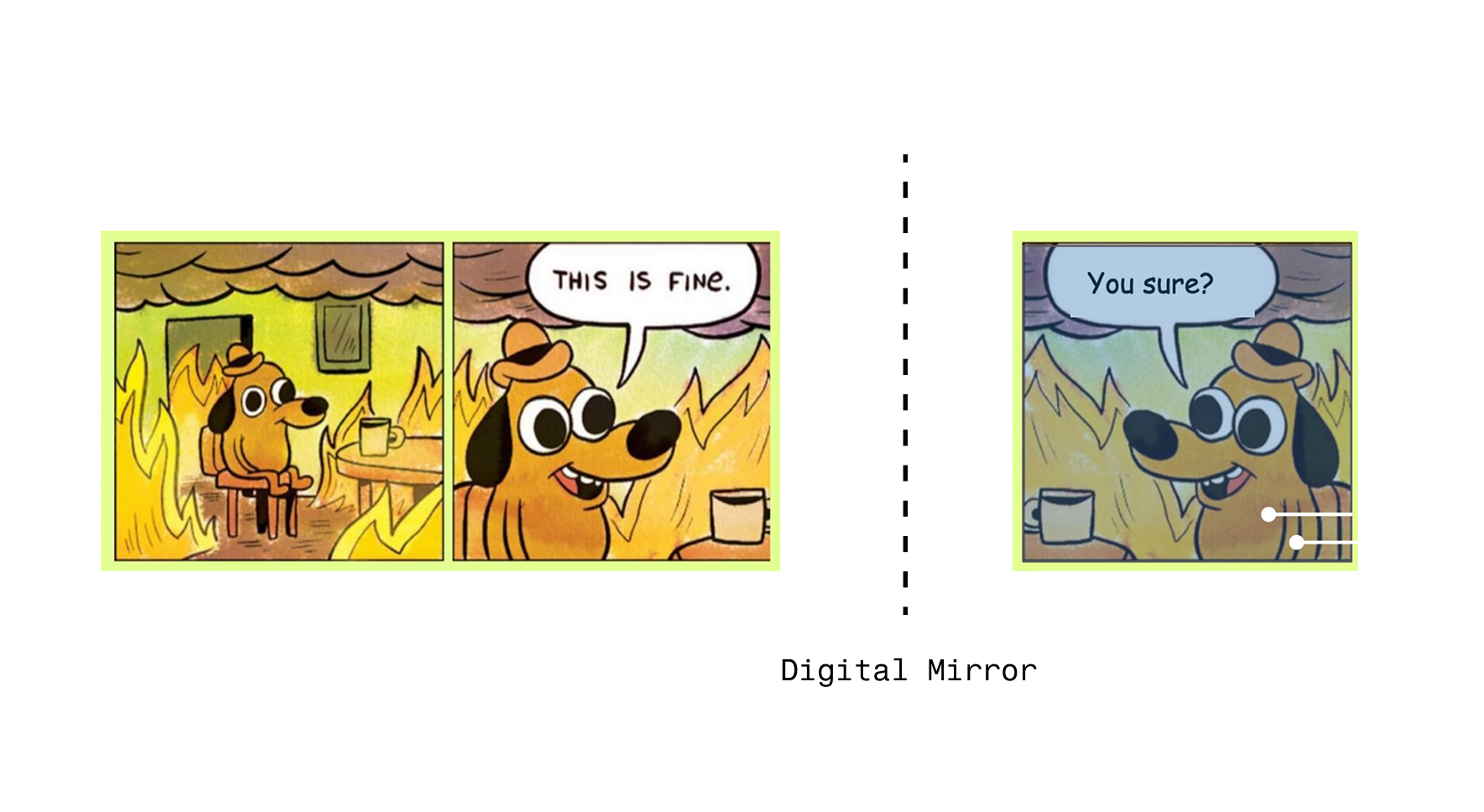
A comic contrasting unchallenged self-talk with a digital mirror

But Is That Always a Good Thing?

The idea of talking to a self-clone is tempting. For a long time, this kind of connection felt firmly in the realm of science fiction (... or every other romance novel). There’s something reassuring about having someone who truly understands you. But what if it agrees with you a little too much? Do we really need one more voice validating our insecurities? Are we even qualified to give advice to ourselves?

That tension between support and harm became the heart of my project at UBC. I led it from an abstract idea to a grounded design that could be evaluated. Working with an interdisciplinary UX and psychology team, I kept the process focused on real people, real risks, and the responsibility of designing AI for mental health.

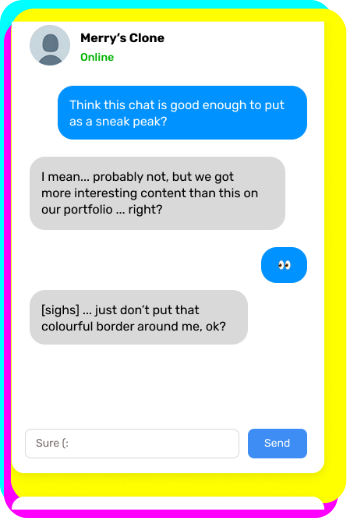
Self-clone conversation concept

Mission

Design and evaluate an AI-powered self-clone chatbot experience that could make self-talk interactive while balancing personalization, engagement, and safety.

/ The Problem & Approach

Self-clones sounded promising... comforting even. But they also sounded like a minefield. Mental health is already a sensitive and delicate space. Add emerging technology, unclear boundaries, and the very casual existential crisis of “what actually makes me, me?” and the project quickly became about far more than building an AI chatbot.

Where do you begin when so much is unknown?
Simple, really ... one step at a time.

To create real-world value, we had to move beyond “cool new technology” and give the exploration clear direction. With no existing playbook, I narrowed the unknowns step by step: defining the design space, consulting mental health experts, testing prompt behaviours, working within technical and ethical limits, and building an evaluation strategy around a functioning self-clone experience.

While the overall process followed the double diamond, it moved in loops. I had to keep returning to the same questions with better evidence and refine my scope. For the sake of simplicity, I’m organizing the design effort into its respective phases in the following sections.

  1. 1. Discover
  2. 2. Define
  3. 3. Develop
  4. 4. Deliver

/ Discover

  • Expert interviews
  • Literature review & workbook study
  • Large-scale online experiments

A self-clone didn’t need to be the perfect copy.

Given the complexity of human behaviour, technical limits, and ethical concerns, recreating every part of a person was neither realistic nor safe. A self-clone only needed enough familiar qualities to feel recognizable.

More data didn’t make a better clone.

The clearest signals of identity came from how people spoke and supported others. With the right context, these patterns were enough to make the clone believable without collecting large amounts of personal data.

There is no universally “safe” self-clone.

What encouraged reflection for one person could become an echo chamber for negative thinking for another. Responsible design needed to shape who the experience was for, what it should support, and where its boundaries should be.

Engagement can provide early evidence of potential.

Broad mental-health outcomes were difficult to claim at this stage. Potential could instead be shown by addressing one of digital mental health’s biggest barriers: keeping people meaningfully engaged.

/ Define

I organized the project into design questions that moved the work from possibility to evidence:

Therapeutic
Consideration

Explore the perceived potential and risks of self-clones, along with user and expert expectations, then translate those into design dimensions and safety guidelines.

Chatbot
Design

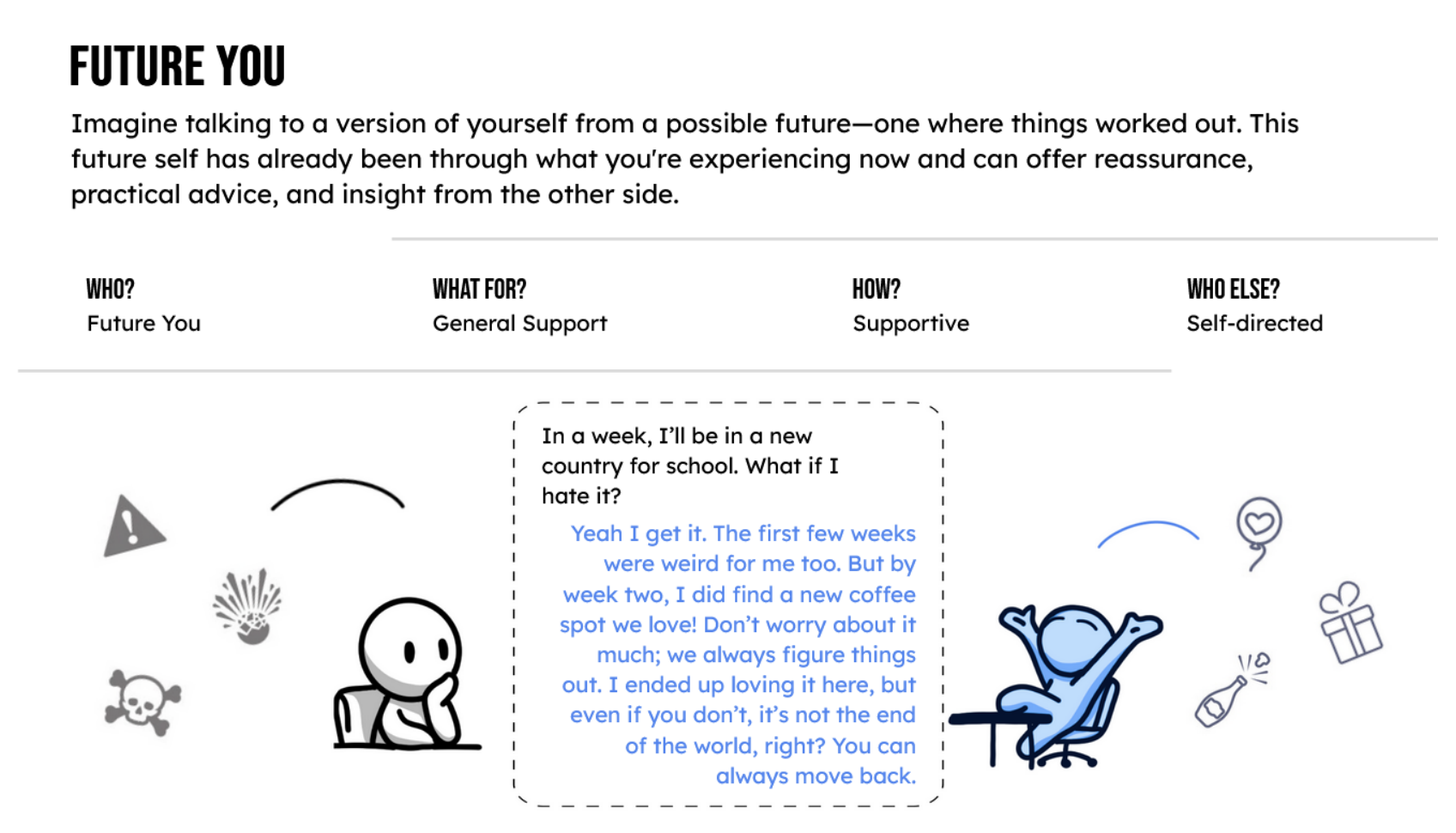
Adapt the self-clone idea into a future-self chatbot for a scoped, believable, and safer interaction model that could be implemented through prompt design.

Evaluation
& Impact

Design a feasible evaluation strategy to provide credible evidence of engagement and believability, and identify where the interaction worked or broke down.

/ Develop

As the lead, I approached development as an iterative process of narrowing an unknown design space into a testable interaction. Working closely with psychologists and HCI researchers, I first translated abstract therapeutic principles into concrete design guidelines, then explored multiple personas and use cases through storyboards, conversation flows, and low-fidelity prototypes. Each concept was reviewed with domain experts before moving forward. Every design decision balanced three priorities: therapeutic value, user safety, and what was realistic within a graduate research project.

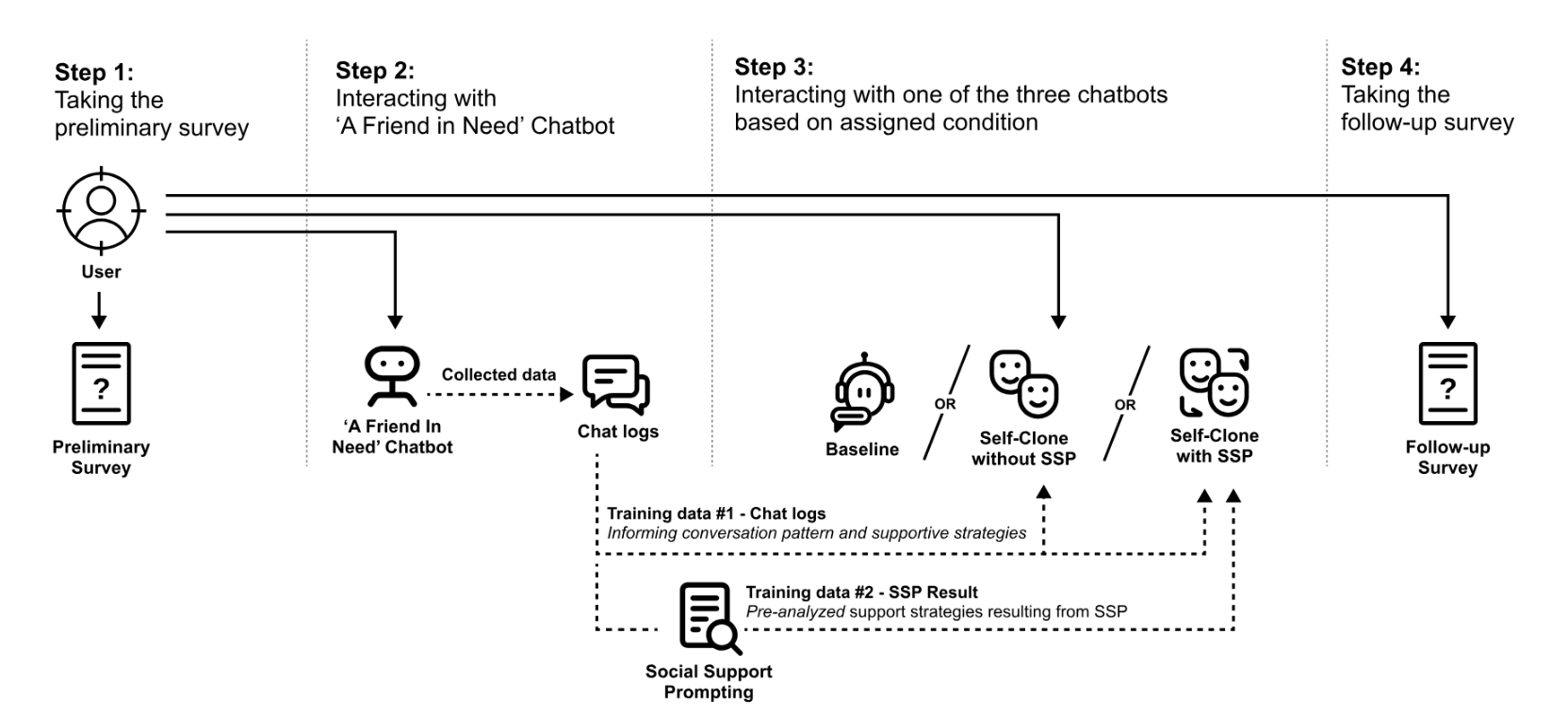
Once the future-self direction was selected, the focus narrowed to the chatbot and interaction design. I iterated on prompts, conversation structure, narrative framing, and a novel data-collection flow that captured how users naturally supported others instead of simply collecting personal information. Through pilot studies, behavioural analysis, and repeated expert feedback, I refined the clone’s personality, safety guardrails, and conversational logic before evaluating two different prompting strategies in a controlled study.

/ Deliver

Design Framework

Informed by the interviews, a three-part design framework was created to guide responsible self-clone design across goals and use cases, helping navigate key design decisions and trade-offs. Read more about it in our CHI paper here! ↗

Responsible self-clone design framework

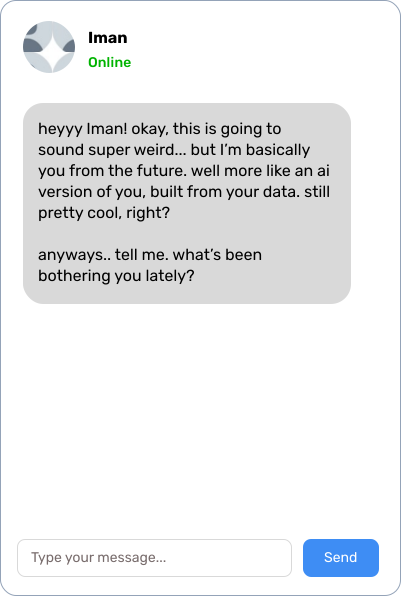
Self-Clone Chatbot

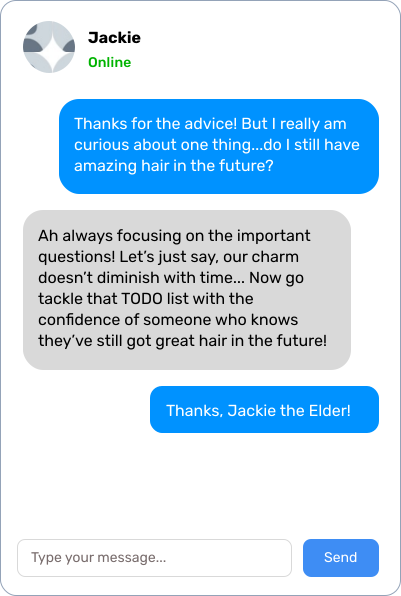
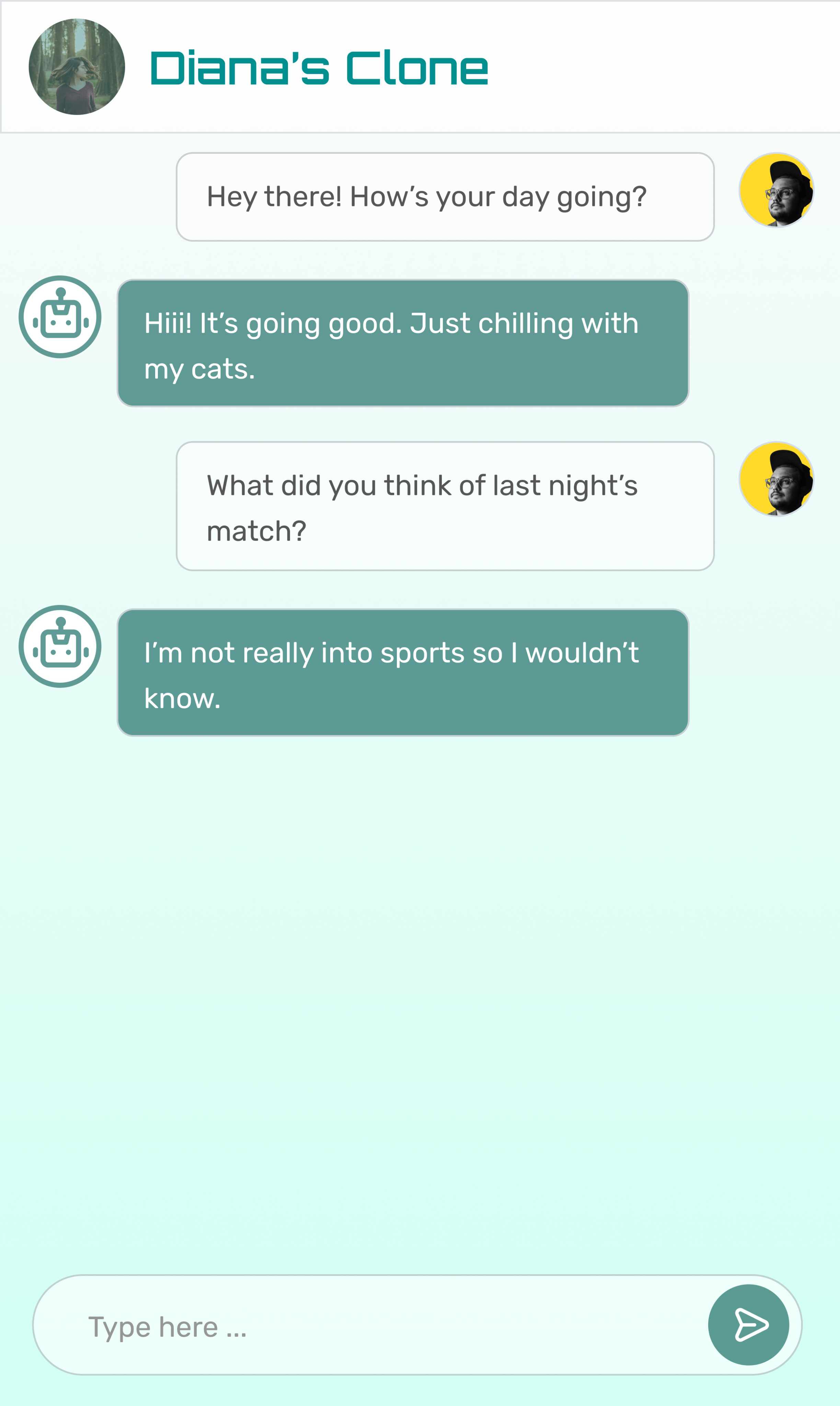
The chatbot interface, featuring sample conversations from user testing, shows how the resulting model adapted to each person’s writing style.

Self-clone conversation adapted to a participant’s writing style
A second self-clone conversation example

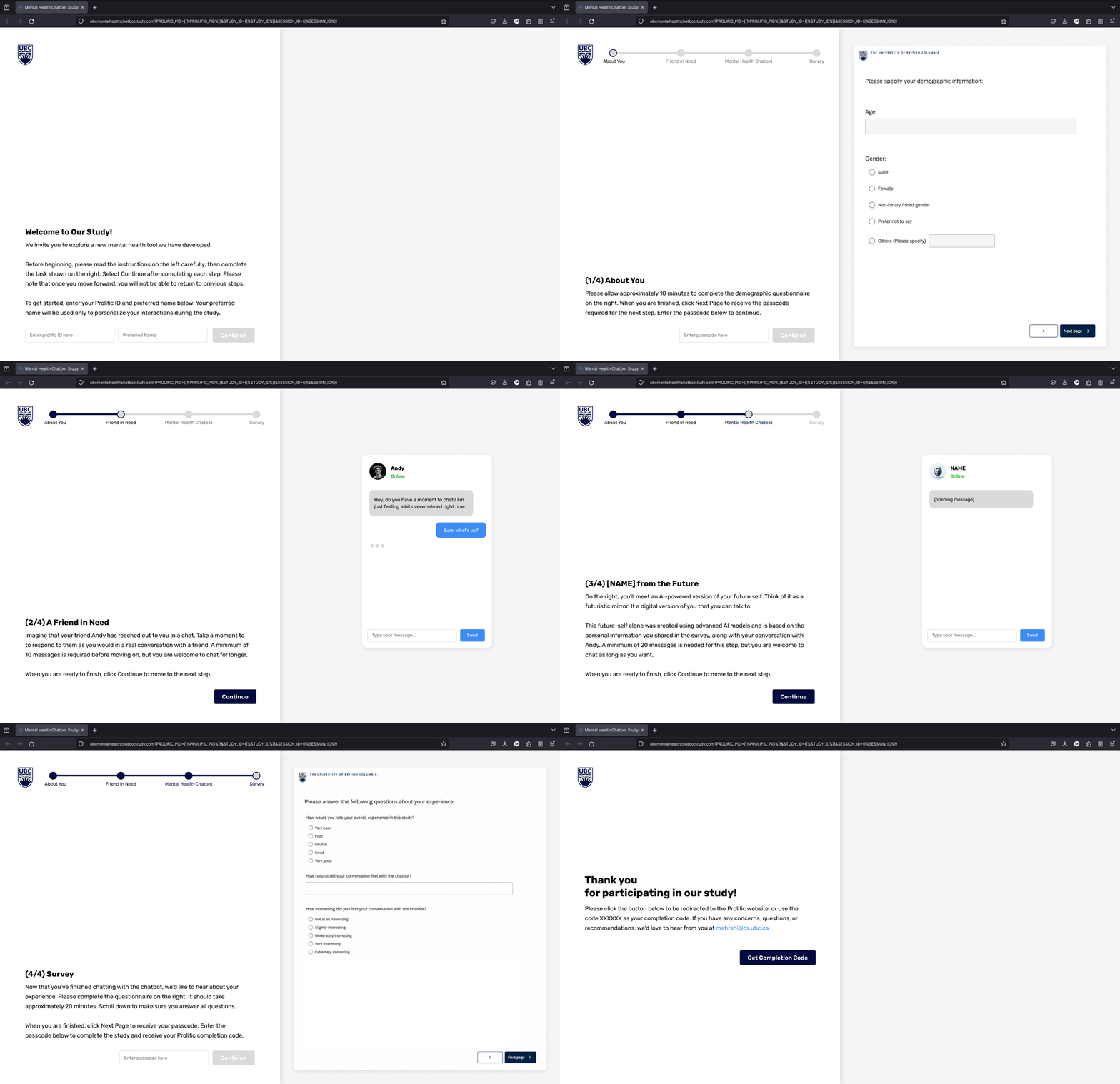
The Experiment Platform

Online study platform used to evaluate the self-clone

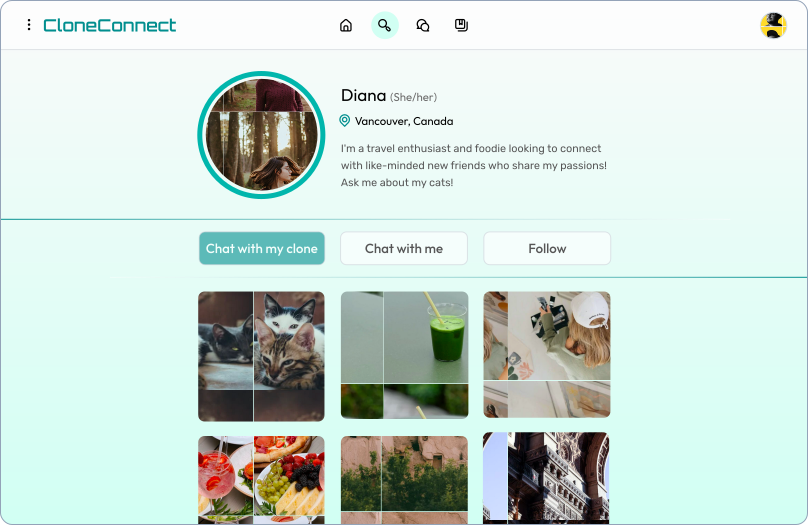
Side Project

AI self-clone social-media side project interface
Self-clone social-media prototype conversation

As a side project, a friend and I combined our interests in mental health and social media to design an AI self-clone chatbot that could help people with social anxiety ease into online relationships by talking to the clone first. Early testing showed promising results, and the project won Crowd Favourite at the UBC DFP Showcase. Check out our poster here! ↗

/ Impact

Resulted in two peer-reviewed HCI papers → The work moved beyond a thesis project into published research contributions in top HCI venues, including one CHI’26 paper ↗ and another ↗ currently under review. Together, as of May 2026, this work has already received 10+ citations.

Contributed early to an emerging design space → As an early project in this domain, the work shaped how our team and adjacent researchers approached self-clone persona, believability, and safety, and supported later AI-clone research across mental health, social media (co-authored paper ↗), and collaboration.

Made the case for domain-aware responsible AI → The work provided credible empirical evidence that responsible design is part of making AI useful, not just safe. It helped demonstrate the need for domain expertise and careful scoping before deploying AI in high-impact contexts.

/ Reflection

Design with limits.

The bias was here to stay, so I gave it a job. Earlier language models tended to be overly positive, and I could not fully fix that within my timeline. So, in strategic defeat, I designed around it: future-self was the perfect framing to give that optimism a believable role. I mean... who doesn’t want to believe they become a little less negative in the future?

Dream. Decide.

A cool idea is not a design strategy. Talking to an AI version of yourself sounded fascinating for about five seconds before the endless directions became overwhelming. I learned that design impact is not just about seeing ambitious possibilities, but also about grounding them: making hard decisions to give the idea enough structure to survive outside my head.

Just one more?

You cannot reach a moving target. Every time I thought the chatbot was ready, a better model became available. Switching meant rebuilding prompts, re-testing behaviour, and reopening decisions I thought were already closed. “One more iteration” could have gone on forever. I learned that in fast-moving AI work, progress depends on knowing the difference between meaningful design improvement and perfectionism in disguise.

Beyond my expertise.

I learned enough to know what I did not know. This project reminded me of a visiting professor who said he was not teaching us his field so we could become experts, but so we would know when to call one. UX gave me tools to frame the experience, but psychology experts brought insight I could not improvise. With different perspectives, priorities, and values in the room, interdisciplinary design became more than bringing experts into the process; it meant creating enough shared understanding to make decisions together.